
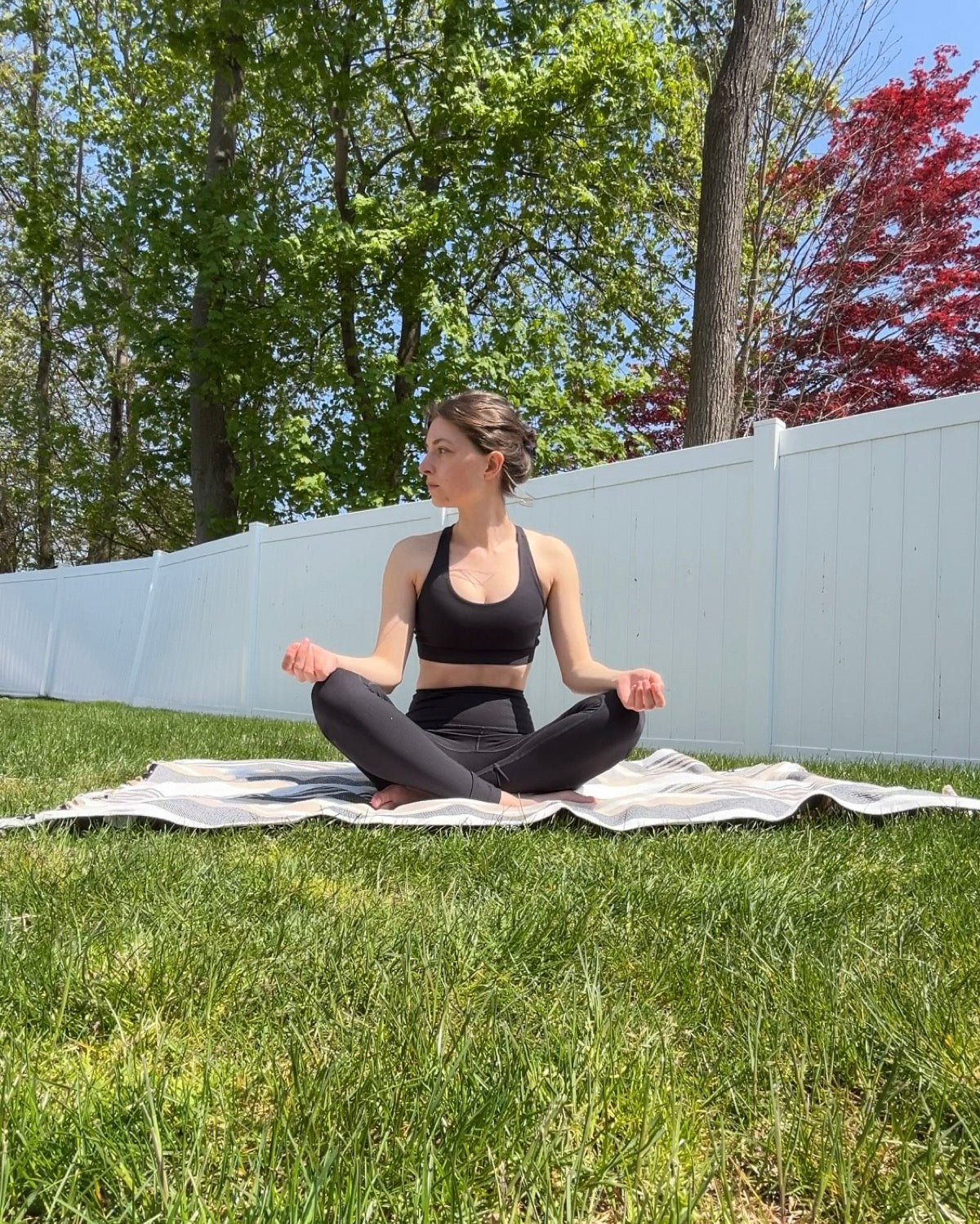
The Body Talks Edit · Volume Seven
Lydia Dupree on material health, fabric chemistry & dressing consciously without losing your style
We love the way Lydia educates her community on material health, breaks down fabric blends, and proves that you can dress consciously without compromising your personal style.

Lydia Dupree
Biochemist · Researcher · Educator · Curator
I am a degreed biochemist researching toxins in the fashion industry. I have curated a platform of non-toxic and sustainable fashion, wellness, and natural beauty products to make it easier for consumers to find healthier product alternatives.
I love daily movement, especially yoga and swimming (I've been learning Qi Gong, too!), spending time at the beach, getting dressed up, and getting lost in a good book.
Most people who talk about clean living arrive at it through food. Lydia Dupree arrived through chemistry. She is a degreed biochemist who studies toxins in the fashion industry, and her entire body of work rests on a question that sounds simple until you try to answer it: what, exactly, is in this garment?
In Volume 7 of The Body Talks Edit, Lydia takes us back to the article that started it all, one about the chemicals used to turn bamboo into fabric, and the realisation that followed: a garment's ingredient list is invisible in a way almost nothing else we buy is. There is no panel on the back of a shirt. The dye, the finish, the anti-wrinkle treatment, the thing that makes a fabric wick moisture; none of it is disclosed.
What makes Lydia's perspective so useful is that she is not asking anyone to give up loving clothes. She loves fashion, and says the chemistry has only deepened that. She talks about certifications worth trusting, marketing language worth doubting, and the natural properties of fibres that make them quietly brilliant. This is a conversation about reading labels the way a scientist would, and dressing exactly like yourself while you do it.
Here's our Q&A with Lydia
✺ ✺ ✺
Q. When did you first start thinking about clothing as part of low-tox or natural living?
I came across an article about 6 years ago that delved into the chemicals used in bamboo clothing. Bamboo is a super sustainable plant, but many toxic chemicals are needed to turn it into a fiber for clothing use, many of which have been linked to increased risk for cancer and endocrine disruption. This was my 'aha' moment that the chemistry in clothing is deeper than the color that brings pieces to life. The ingredients used can directly impact the health of consumers, garment workers, farmers, and the environment alike. How is it fair for clothes to possibly impact fertility, for example, and for consumers not to be warned?
“The chemistry in clothing is deeper than the color that brings pieces to life.”
Lydia Dupree

Q. How has choosing non-toxic apparel changed the way you relate to your body day-to-day?
Choosing clothing with a more mindful approach feels like a love language, a way to show my body that I care. When you take direct responsibility for your well-being, you form a deeper connection with yourself and apply that care in other areas of your life, too. Suddenly, you are working out more, prioritizing nutrient-dense foods and daily sunlight, and forming a community. Seeing your physical being as sacred is a beautiful way to live your life.

Q. How has learning about materials and production changed how you shop?
I have always loved fashion, and having a greater understanding of clothing materials and production has deepened that love. It has brought me back to the balance between function and beauty in fashion. I have a higher eye for detail and focus on natural fabrics treated with cleaner chemistry - from dyes to treatments. I avoid synthetics when I can and look for certifications such as OEKO-TEX and bluesign for their strict rules on what chemicals are allowed in the clothes with their stamp on them.
I am also very wary of marketing. Buzzy features like 'water-wicking' or 'wrinkle-resistant' may sound beneficial, but you have to realize that chemical treatments are used to give fabrics these abilities. It has also made me more aware of the natural properties of plant- and animal-based fabrics, such as merino wool for its antibacterial properties, its ability to help the body regulate temperature, and its fast-drying quality. These make it an unexpected activewear hero. And innovative fabrics like SeaCell that actually contain nutrients. How cool is that?

Q. Why do you think so many women feel disconnected from what their bodies are asking for?
Women are disregarded so much by society, including by those you would hope you can trust, like loved ones and healthcare providers, that we lose our innate understanding of our bodies and question ourselves. It takes a lot of daily listening and following intuition to hone and maintain. Luckily, you can return to yourself at any time. Take an extra moment to get daily movement, nourishment, or do something that you love, and listen to how that makes you feel. In the same way, listen when something feels wrong. As you tune back in, it becomes clearer and easier to follow, no matter what the noise around you is saying. The goal is to re-establish trust in yourself.
“Choosing clothing with a more mindful approach feels like a love language, a way to show my body that I care.”
Lydia Dupree
Q. What's one message you'd share about dressing in a way that truly supports the body?
I may sound like a broken record, but what you wear against your skin matters. What you sleep in, sweat in, and put at your most sensitive and absorbent areas (ahem, intimates) can directly impact your health. This goes for both women and men. Having an understanding of what is healthy vs. risky is important (which is my goal to help consumers learn), and although most fast fashion brands don't disclose ingredients, many pioneering brands do (like Kiseau!!). Buying less with more discernment will help your health and your loved ones' health in the long run.
✺ ✺ ✺
Three filters from this conversation
Read the fibre content label first
It is the one piece of information brands are required to disclose. Start there, then ask what the fabric was treated with. Natural fibre content is the floor, not the ceiling.
Treat performance claims as a question
As Lydia points out, wrinkle-resistant and moisture-wicking are not properties fabric has on its own. Something was applied to create them. Worth knowing what.
Let certifications do the vetting
OEKO-TEX, bluesign, and GOTS each restrict what chemistry is permitted. They are not perfect, but they are independent, and they save you from having to audit every brand yourself.
The Ingredient List Nobody Prints
A fibre content tag tells you a garment is 70% cotton. It tells you nothing about the dye, the softener, the finish, or the treatment that makes it resist a wrinkle.
That gap is part of Lydia's work. Her bamboo example is a good one to sit with, because it breaks the assumption most of us start from: that a natural, fast-growing plant must produce a clean fabric. Turning bamboo into conventional viscose is a chemically intensive process, and the plant's sustainability credentials say nothing about what happens in the mill. Natural origin and clean processing are two separate questions, and only the first one tends to make it into the marketing.
This is where independent certification earns its keep. OEKO-TEX, bluesign, and GOTS exist precisely because a consumer cannot inspect a supply chain. Each sets rules about which substances may be used and tests against them, which turns an impossible research project into something you can check on a hangtag.
The garments worn closest to the body, for the longest hours, against the most absorbent skin, are usually the ones bought with the least thought. Lydia's take on shopping is refreshingly unglamorous: buy less, with more discernment. If you want somewhere to begin, our guide to transitioning to a non-toxic wardrobe starts with exactly that layer, and our explainer on SeaCell™ fabric covers the seaweed-derived fibre she mentions.
Follow Lydia
Lydia curates a directory of non-toxic and sustainable fashion, wellness, and natural beauty brands, and breaks down material health for her community daily.
Website Brand Directory InstagramKnow what's against your skin
Underwear cut from GOTS certified organic cotton and SeaCell™ Lyocell. Breathable, non-restrictive, and made with fabrics we can tell you the provenance of.
Shop KiseauCommon Questions About Fabric Chemistry & Material Health
Is bamboo clothing actually non-toxic?
Bamboo is a fast-growing, renewable plant, but most bamboo fabric on the market is bamboo viscose, made through a chemically intensive process that dissolves the plant into a fibre. As Lydia Dupree explains, the sustainability of the crop tells you nothing about the chemistry of the mill. Look for closed-loop lyocell processing or independent certification rather than assuming a plant-based origin means a clean fabric.
What is OEKO-TEX certification?
OEKO-TEX® STANDARD 100 is an independent testing and certification system for textiles. Every component of a certified item, including thread, dyes, and trims, is tested against a list of regulated and non-regulated substances known to be harmful to health. It is one of the most widely recognised ways to verify that a fabric has been screened for harmful chemistry.
What is bluesign certification?
Where some standards test the finished product, bluesign works upstream by approving the chemical inputs allowed into production in the first place. It covers chemical use, worker safety, and resource consumption across manufacturing. Lydia cites it alongside OEKO-TEX for its strict rules on what is permitted in certified garments.
Are wrinkle-resistant and moisture-wicking fabrics chemically treated?
Generally, yes. These are performance finishes applied to fabric rather than inherent properties of the fibre. As Lydia notes, marketing language that sounds like a benefit often describes a chemical treatment, and those treatments are rarely disclosed. If you want the function without the finish, look to fibres with the property built in.
Which fabrics have useful natural properties?
Lydia points to merino wool for its natural antibacterial qualities, temperature regulation, and fast drying, which she calls an unexpected activewear hero. Linen and hemp are breathable and durable, organic cotton is soft and low-irritation, and SeaCell™ Lyocell incorporates seaweed into the fibre itself. These work with the body without a chemical finish doing the work.
Why does underwear fabric matter more than other clothing?
Intimates are worn for long stretches against the most sensitive and absorbent skin on the body, often overnight as well as through the day. As Lydia puts it, what you sleep in, sweat in, and put at those areas can directly impact your health. It is the highest-contact garment in most wardrobes and usually the least scrutinised, which makes it the most sensible place to start.
Material Health Non-Toxic Fashion Fabric Chemistry Low-Tox Living Natural Living Natural Fibers OEKO-TEX Conscious Consumption Slow Fashion The Body Talks Edit
The Body Talks Edit is a Kiseau series featuring real stories from real women about their health and wellness journeys. Content is for informational and community purposes only and does not constitute medical advice. Always consult a qualified healthcare professional regarding your individual health concerns.
A note on our certifications: Kiseau garments are cut and sewn from fabrics that carry independent certifications, GOTS (Global Organic Textile Standard) for our organic cotton fabric and OEKO-TEX® STANDARD 100 for fabric safety testing, held by our certified fabric mills. Our finished garments are not yet independently certified; we are currently completing certification of our final products and will update this note when it's done. Certificates covering our materials are available on request at hello@kiseau.com.