k,so... journal entries

k,so... journal entries

How Lifestyle Changes Can Help Prevent UTIs (And Why Your Underwear Is Part of the Equation)

Most UTIs are preventable. Here are the lifestyle changes that actually reduce your risk — and why the fabric you wear closest to your skin is part of the equation.

k,so... journal entries

How to Transition to a Non-Toxic Wardrobe: Starting With What's Closest to Your Skin

Building a non-toxic wardrobe doesn't have to be overwhelming. Start with what touches your skin most and learn why organic underwear is the single highest-impact first step.

k,so... journal entries

The Thoughtful Gift Guide: Organic Underwear Sets for the Health-Conscious Woman

Looking for a genuinely thoughtful gift? Kiseau's organic underwear Discovery Set is GOTS-certified, SeaCell-infused, and beautifully presented. Ships to the US and Canada, duties included.

k,so... journal entries

7 Habits That Actually Help Prevent UTIs: A Women's Guide to Daily Urinary Health

Roughly 50–60% of women experience at least one UTI in their lifetime — and most are preventable. Here are 7 science-backed daily habits that make a real difference, including why your underwear choice is a medical consideration.

k,so... journal entries

Cotton Gusset vs Fully Organic Underwear: Why the Liner Makes All the Difference

Many underwear brands add a cotton gusset inside synthetic fabric and call it skin-friendly. But if the rest of the garment is polyester, is a cotton liner really enough? Kiseau explains why it isn't.

k,so... journal entries

Bamboo vs Organic Cotton vs Seaweed Fabric: Which Is Actually Better for Your Body?

Bamboo, organic cotton, or SeaCell seaweed lyocell — which fabric is genuinely best for your skin and the environment? An honest, evidence-based comparison for US and Canadian shoppers.
The Unseen Exchange: Why Your Underwear Choice Matters More Than You Think

k,so... journal entries

The Unseen Exchange: Why Your Underwear Choice Matters More Than You Think

We’ve learned to care deeply about what goes into our bodies. But what about what stays pressed against us all day? Underwear isn’t neutral. It shapes the environment of our most sensitive skin. From breathability to chemical exposure, science is inviting us to rethink the fabrics we wear closest to our bodies; and how small, intentional choices can support long-term wellbeing.

k,so... journal entries

Organic Underwear for Sensitive Skin: What Dermatologists and OB-GYNs Actually Recommend

If you have sensitive skin, recurring UTIs, or vulvar irritation, your underwear may be playing a bigger role than you realize. Here's what dermatologists and OB-GYNs actually recommend.

k,so... journal entries

Where to Buy Organic Underwear in Canada (And Why Most Options Fall Short)

Finding genuinely certified organic underwear in Canada is harder than it should be. Here's what to look for, which certifications matter, and why Kiseau ships with duties included.

k,so... journal entries

The Complete Guide to Organic Underwear Certifications: GOTS, OEKO-TEX, and What They Actually Mean

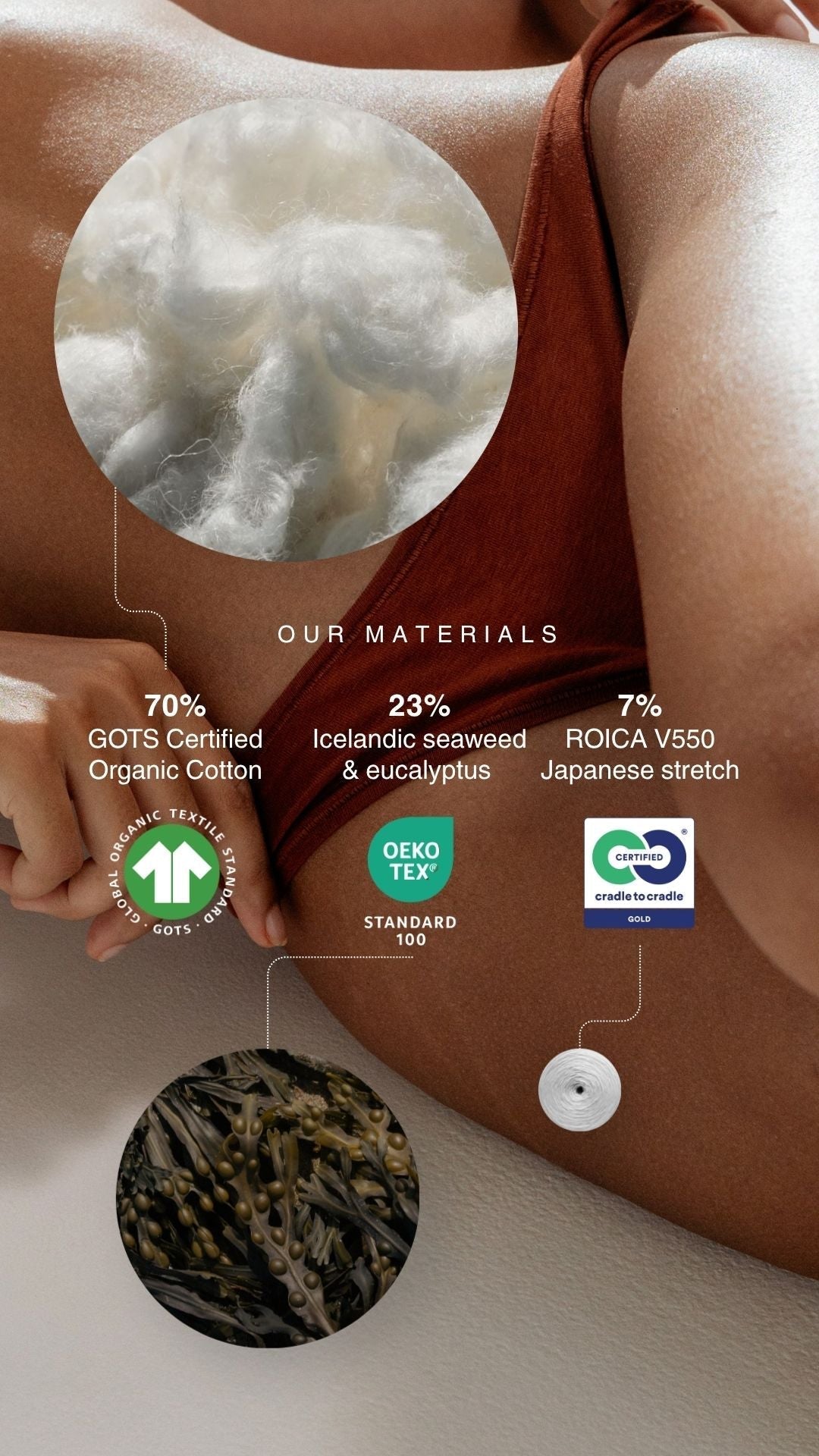
Not all 'organic' underwear is created equal. Here's what GOTS, OEKO-TEX Standard 100, and Cradle to Cradle certifications actually verify — and why Kiseau holds all of them.

k,so... journal entries

PFAS-Free Underwear: What Forever Chemicals Are Hiding in Your Intimates

PFAS — forever chemicals — have been found in clothing and intimates. Learn what they are, why they matter for your health, and how to choose truly non-toxic underwear in the US and Canada.

k,so... journal entries

What Is SeaCell™ Fabric? The Science Behind Seaweed-Infused Underwear

Kiseau is the only organic underwear brand using SeaCell™ Lyocell — a fabric made from wild Icelandic seaweed and eucalyptus. Here's what seaweed-infused fabric actually means, how it's made, and whether it genuinely benefits your skin.
What to Look For in Underwear for UTI-Prone or Sensitive Skin

k,so... journal entries

What to Look For in Underwear for UTI-Prone or Sensitive Skin

The Best Underwear for Women with Recurring UTIs & Irritations If you experience recurring UTIs, irritations, or discomfort, the fabric you wear closest to your skin plays a bigger role than you may realize. Synthetic fabrics like polyester, nylon, lycra and spandex trap heat and moisture, creating the perfect environment for bacteria to thrive. They also reduce airflow and increase irritation around sensitive areas, especially the urethra and vulva. Switching to breathable, natural, non-toxic underwear, like Kiseau is one small (but powerful) step toward lasting comfort and prevention. 1. Breathable, Natural Fabrics Choose organic cotton or other clean, natural fibers that allow airflow and absorb moisture. Breathability helps keep your intimate area balanced. 2. Moisture-Wicking Design Opt for underwear that naturally wicks away sweat or discharge. 3. Minimal Synthetics & Simple Construction Avoid undies that claim to have cotton linings but predominantly use nylon or spandex. It still traps heat because the outer shell is made of synthetics. 4. Comfortable, Non-Restrictive Fit Skip tight waistbands or shapewear that compresses your lower abdomen. Gentle, flexible fits allow airflow and reduce friction. 5. Toxin-Free Materials Many fabrics are treated with PFAS (“forever chemicals”), synthetic dyes, or finishing agents that can irritate skin and disrupt hormones. Look for undies that are free of these hidden toxins. 🌊 How Kiseau Undies Support Your Intimate Wellbeing Kiseau was created to redefine the most intimate layer of clothing, with your health and the earth at the core of it all. Certified Organic Cotton (GOTS): Free from pesticides, insecticides, and harmful residues found in conventional cotton. Our organic cotton is always non-GMO. OEKO-TEX® Standard 100 Safe Dyes: Our dyes meet strict global safety standards, so your skin stays free from chemical exposure to azo dyes, formaldehyde, bleaches and heavy metals. Infused with Icelandic Seaweed: We use SeaCell in Kiseau undies, rich in skin-soothing nutrients like antioxidants, vitamins and amino acids that help nourish and protect your skin barrier. Free of PFAS (forever chemicals): Because your underwear shouldn’t contain the same materials as Teflon. 🚫 Fabrics to Avoid If You Experience Infections Polyester – Traps heat and moisture. Nylon – Non-breathable and can cause irritation. Spandex/Elastane/ Lycra – Often blended with synthetics, increasing trapped heat. These fabrics block airflow and create the warmth and dampness that bacteria love, which can contribute to recurring UTIs and irritation. 🌸 Pro Tips for UTI Prevention & Intimate Health Change often: Always switch to clean underwear after workouts or sweating. Sleep commando: Let your body breathe overnight. Skip underwear at bedtime if possible. Use gentle laundry care: Avoid scented detergents and fabric softeners; choose fragrance-free, natural options. After intimacy: Always pee after sex to flush out bacteria. Skip harsh soaps: Your vulva is self-cleaning, use only mild, unscented cleansers. Eat for balance: Focus on whole, cooling foods; avoid excess sugar and processed snacks. Manage stress: Chronic stress affects your immune and hormonal balance. Take time for self-care, yoga, or time in nature. Hydrate & rest: Water supports your body’s natural cleansing processes. Underwear alone can’t cure a UTI, but it can help create the right conditions for healing and prevention. Choosing breathable, toxin-free fabrics and comfortable fits allows your body to restore its natural balance. Discover Kiseau’s seaweed-infused, organic underwear, consciously designed to let your body breathe and thrive.
What fabrics are bad for vaginal health?

k,so... journal entries

What fabrics are bad for vaginal health?

What Fabrics Are Bad for Vaginal Health? When we think about intimate wellness, we often focus on skincare, diet, or supplements, but rarely on what’s quietly touching our most delicate skin all day long. The truth is, the fabric your underwear is made of can directly impact your vaginal health. So, what fabrics should you avoid if you want to protect your intimate health? Let’s dive in! 🚫 1. Polyester: Plastic in Disguise Why it’s bad: Polyester is a petroleum-derived plastic fiber, the same polymer (PET) used to make water bottles. It blocks airflow, traps sweat, and holds heat and bacteria close to your skin. The health concern: Polyester isn’t just uncomfortable. It can contain antimony trioxide, a manufacturing catalyst classified as a possible carcinogen by the International Agency for Research on Cancer (IARC). Traces can leach out with heat and friction and be absorbed through the skin, especially in the vulva area, which is highly permeable. Many polyester fabrics are also treated with PFAS (“forever chemicals”) to make them moisture-wicking, wrinkle-free, or odor-resistant. PFAS are linked to hormone disruption, reproductive issues, immune suppression, and certain cancers. In short: polyester may feel “soft,” but it behaves more like plastic wrap than fabric. 🚫 2. Nylon: The Synthetic That Suffocates Why it’s bad: Nylon may feel silky, but it’s non-breathable and often coated with chemicals to improve stretch or water resistance. These finishes can irritate sensitive skin and disrupt your natural pH. Nylon is also another petroleum-based fabric that can shed microplastics, contributing to irritation, allergic reactions, and even environmental contamination. 🚫 3. Spandex & Elastane: Stretch That Suffocates Why it’s bad: While spandex (also known as elastane or Lycra) gives clothing that familiar stretch, it’s a synthetic polymer that holds heat and moisture. Most spandex fabrics contain microplastics and PFAS coatings, both linked to hormone and endocrine disruption. These chemicals don’t wash out and can sit against your skin for hours, especially in tight clothing or shapewear. The result is restricted circulation, excess heat, and recurring irritation in sensitive areas. 4. Synthetic Blends: The “Almost Organic” Trap Many underwear brands advertise “organic cotton,” but if only the liner (gusset) is cotton and the rest of the garment is nylon or spandex, it’s not breathable. Even if the inner lining is natural, the synthetic outer fabric traps moisture and heat, negating the benefit. For true comfort and vaginal health, “a cotton liner” isn’t enough. 5. What Else Are These Fabrics Used In (and Why That Matters) Here’s what most people don’t realize: The same polyester and nylon fibers used in fast fashion and underwear are also found in industrial and plastic-heavy products designed for durability, and insulation. 🏭 These Fabrics Are Also Used In: Carpets, couches, and upholstery Tents, parachutes and outdoor gear Car seat covers, airbags, and seatbelts Ropes, sails, and industrial safety nets Yoga mats and microfiber cleaning cloths Fast-fashion activewear and swimwear Plastic bottles and packaging (made from PET — the same material as polyester) Now imagine that same plastic material pressed against the most absorbent part of your body all day. If it’s strong enough to upholster a car seat, it shouldn’t be the same material sitting against your skin. Fabrics That Support Vaginal Health ✅ Organic Cotton Soft, breathable, and naturally soothing. Organic cotton allows airflow and moisture balance. Look for GOTS-certified cotton to ensure it’s grown without pesticides or toxic residues. ✅ Seaweed-Infused Fabrics (SeaCell) Seaweed is naturally rich in minerals, antioxidants, and soothing properties that support your skin’s barrier and microbiome. Blended with Eucalyptus tree pulp, it creates a blend that’s antibacterial, breathable, and nurturing for your most intimate skin.
Your BFF Everyday Guide to Intimate Balance

k,so... journal entries

Your BFF Everyday Guide to Intimate Balance

UTIs aren’t random. They’re your body’s way of saying something’s off.From hydration and hygiene to the fabrics you wear, small daily habits can make a big difference in keeping your body balanced. In this guide, we share simple, holistic lifestyle shifts that help support urinary health naturally, from swapping toilet paper for bidets, letting your body breathe in natural fibers (like our seaweed-infused undies), and more.  Because healing your intimate health isn’t just about treatment when things go south. It’s about awareness, prevention, and self care no matter what.
Intimate Care From Around The World: Natural Remedies & Rituals

k,so... journal entries

Intimate Care From Around The World: Natural Remedies & Rituals

Join us on a trip around the world as we explore how different cultures approach intimate feminine hygiene from Ayurvedic cooling herbs in South Asia to rosewater rituals in the Middle East. This piece dives into how women everywhere have cared for their bodies through nature, balance, and awareness long before the term “self-care” existed. Because no matter where you are, the message is the same: let your body breathe, stay connected to nature, and honor the rhythm that keeps you in balance.
Your Skin Deserves Better: Why Natural Underwear Changes Everything

k,so... journal entries

Your Skin Deserves Better: Why Natural Underwear Changes Everything

There’s one garment that hugs your body all day long and yet, most of us never think about what it’s made of. If your undies are still synthetic, they might be doing more harm than you realize. From trapped heat and irritation to hormone disruption and microplastic pollution, synthetic fabrics can throw your body’s natural rhythm off balance. In this piece, we explore ten powerful reasons to make the switch to natural underwear for your skin and your health.Switching to natural, biodegradable fibers like seaweed, organic cotton, and eucalyptus isn’t just about comfort, it’s about self-care.
Sustainability Is Not A Sprint

k,so... journal entries

Sustainability Is Not A Sprint

Can we normalize showing up everyday by doing your best, and not having it all figured out?
 During one of our conversations with Noami Grevemberg through our k,so series we talked about how going to the extreme with trying to achieve perfection in building a sustainable life often leads to burnout and takes the joy out of the journey. It can create fear and pressure, instead of allowing space for mindfulness and awareness to guide your choices. Sustainability isn’t about perfection; it’s about progress. It’s about making thoughtful shifts when they become accessible to you, in your own time and within your own circumstances.When I first began my natural clothing journey, I went all in purging every plastic-based piece I owned. But it left me with so little to wear, and I suddenly felt disconnected from my sense of style and self-expression. Now, I’m slowly rebuilding my wardrobe with natural fibers, one intentional piece at a time. But now, I also realize that it’s a slow, lifelong process, and that’s okay. Swapping your wardrobe for natural clothing isn’t about doing it overnight.Noami experienced something similar during her zero-waste chapter. She dove in headfirst, bulk buying everything, going all in snd eventually found her balance after going extreme too.Living sustainably and healthfully isn’t meant to be a self-torturing cycle.The word sustainable means to “sustain”. To do something in a way that’s realistic, supportive, and long-term.Set non-negotiables that make sense for you. Create small filters that help guide your choices for you. If you’re shifting toward wearing more natural fabrics,ask yourself which parts of your wardrobe are out of alignment with your values.Replacing next to skin essentials and apparel you sweat in is a great place to start.And don’t be hard on yourself. That one-of-a-kind dress you bought, or that nostalgic windbreaker….you don’t have to let it go, especially if it’s already something you own.Don’t forget that small decisions ripple into big change, one mindful decision at a time.